
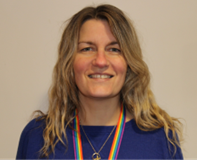



Should you have any concerns relating to the safety and welfare of a child at the school, you should immediately contact our safeguarding team at safeguarding@qma.clf.uk or through the main school phone number 01684 292198 and request to speak with someone in the safeguarding team. The Local Authority Children’s and families help desk can be contacted on 10452 426565.
On the rare occasion that our core safeguarding team is unavailable, please report your concerns to the Headteacher.
Should you have any concerns in terms of safeguarding relating to the behaviour of a member of staff, you should immediately contact the Principal. Should you feel that your concerns have not been dealt with appropriately by the school or Academy Councillors, you should contact the Designated Officer at the Local Authority at:
Email: amadmin@gloucestershire.gov.uk
Phone: 01452 426994
If you have any concerns regarding the safety of the school site, please contact the school through the main school telephone number.
The councillors and school staff team are committed to keeping our children safe and we regularly review our school policies and procedures to ensure that everything is being done to fulfil our duty of care. All staff are familiar with the government’s guidance for schools – Keeping Children Safe in Education.
The Safeguarding Policy can be found along with all other academy policies on the Policies page under the Key Information menu.
We are an equal opportunities employer. At least one member of every interview panel has had Safer Recruitment training. All offers of employment are subject to a disclosure and barring check (DBS), medical clearance and satisfactory references.
At Queen Margaret Primary Academy, we aim to equip our students with the knowledge, understanding and skills to use information and communication technology creatively and purposefully. A key aspect of this lies in being digitally literate. Online technologies play a huge role and so providing a broad and balanced e-safety education is vital to ensure our students can navigate the online world safely and positively.
Prevent is about safeguarding people and communities from the threat of terrorism. Prevent is one of the four elements of CONTEST, the Government’s counter-terrorism strategy. It aims to stop people becoming terrorists or supporting terrorism.
Incidents of extremism and radicalisation are rare and as such when they do occur, make the news. As with all safeguarding issues, it is important to be vigilant, and not complacent, but also not to panic.
Prevent defines extremism as: “Vocal or active opposition to fundamental British values, including democracy, the rule of law, individual liberty and mutual respect and tolerance of different faiths and beliefs. We also include in our definition of extremism calls for the death of members of our armed forces.”
Radicalisation is defined by the UK Government within this context as “the process by which a person comes to support terrorism and extremist ideologies associated with terrorist groups”.
We live in a wonderfully diverse world, with both differences and similarities to celebrate. Exploring religious and different social beliefs, in a peaceful and non-violent way, is part of growing up and should not be confused with something more sinister. The best way to PREVENT extremism and radicalisation is by open discussion and increased understanding of each other.
Child Sexual Exploitation (CSE) is a form of child sexual abuse. Sexual abuse may involve physical contact and or noncontact activities, such as involving children in the production of sexual images, forcing children to look at sexual images or watch sexual activities, encouraging children to behave in sexually inappropriate ways or grooming a child in preparation for abuse including via the internet.
CSE can occur over time or be a one-off occurrence and may happen without the child’s immediate knowledge, for example through others sharing videos or images of them on social media. CSE can affect any child who has been coerced into engaging in sexual activities. This includes 16- and 17-year-olds who can legally consent to have sex. Some children may not realise they are being exploited. For example, they may believe they are in a genuine romantic relationship.
Female genital mutilation is the mutilation of the external female genitalia for non-medical reasons. It is often referred to as female circumcision, ‘cutting’ or ‘sunna’.
If you are worried that this might happen to you or someone you know, you can speak to a member of the safeguarding team in school. They will be able to help and support you.
Alternatively, you can report this abuse by contacting one of the following:
If there’s immediate danger or if you or someone you know is in immediate danger of FGM, contact the police.
Call 999 to report emergencies or 101 for non-emergencies.
You should also contact the Foreign and Commonwealth Office if you know a British national who’s already been taken abroad.
Foreign and Commonwealth Office
Telephone: 020 7008 1500
If you or someone you know is at risk: contact the NSPCC anonymously if you’re worried that a girl or young woman is at risk or is a victim of FGM.
NSPCC FGM Helpline
Email: fgmhelp@nspcc.org.uk
Telephone: 0800 028 3550
Domestic abuse can be perpetrated in many different ways. These actions fall into the categories of:
Domestic abuse could happen to anyone. It is never acceptable and is definitely not healthy. Abuse does not always mean being hit, it also includes sexual abuse and bullying.
Domestic abuse is not always carried out by a partner, it could be an ex-partner or a family member. It also includes honour-based abuse such as forced marriage and female genital mutilation.
It can happen to people who identify as straight, lesbian, gay, bisexual, or transgender. Your sexual orientation or your gender identity do not make you less likely to experience domestic abuse.
If you are feeling intimidated by a partner (or ex-partner or family member), or they have made you feel frightened, then you may be experiencing domestic abuse.
Should you need support:
https://www.gdass.org.uk/get-support Call 01452 726570 or email support@gdass.org.uk. They are open 9am to 5pm, Monday to Friday.
Operation Encompass is a police and education early information safeguarding partnership enabling educational settings to offer immediate support to children experiencing domestic abuse.
Operation Encompass ensures that there is a simple telephone call or electronic notification to a school’s trained Designated Safeguarding Lead /Officer (known as Key Adult) prior to the start of the next school day after an incident of police attended domestic abuse where there are children related to either of the adult parties involved.
Information is shared with a school’s Key Adult (Designated Safeguarding Lead or Officer) prior to the start of the next school day after officers have attended a domestic abuse incident. This sharing of information enables appropriate support to be given, dependent upon the needs and wishes of the child.
Children are negatively impacted by experiencing domestic abuse and without early intervention and support this negative impact can last through a child’s life course. Domestic abuse can impact upon social, psychological, physical, emotional and behavioural outcomes with an often-negative impact upon a child’s academic success. Experiencing domestic abuse has been identified as an Adverse Childhood Experience.
Operation Encompass aims, by directly connecting police and schools, to secure better outcomes for children , to enable schools to better understand the impact living with domestic abuse has upon children, to help schools to better understand a child’s living experience and to therefore be able to support and nurture each child , making a child’s day better and giving them a better tomorrow.